

Key Takeaways
- Registered nurses earn a median $97,550 a year with 6% projected growth through 2035, while sonographers earn close to that at $96,590 with 14% growth and respiratory therapists earn $82,280 with 9% growth
- The right healthcare career depends on the type of daily work, training length, and career path that fits a person best, not on which job pays the most
- A respiratory care program can take about 16 months to complete, while a bachelor’s degree in nursing or sonography takes about four years
- Sonography centers on operating imaging equipment and reading live images, nursing covers broad patient care across many settings, and respiratory therapy focuses on breathing and cardiopulmonary conditions
- Nursing, sonography, and respiratory care programs each follow distinct application windows and seat counts, worth checking directly when planning a prerequisite schedule
Picking a healthcare career can feel like standing at a fork with three good roads ahead. Nursing, respiratory therapy, and sonography all lead to steady, respected work helping people feel better. Each one asks something different of the person walking that road, and that difference matters more than any ranking ever could.
Three Careers, One Big Choice
A lot of comparisons try to crown one career as the best. That approach misses the point. Nursing, respiratory therapy, and sonography each serve patients in real and necessary ways, and each one rewards a different kind of person. Someone who loves variety and wants to coordinate care over time might thrive in nursing. Someone who likes a technical, hands-on task with a clear beginning and end might lean toward sonography. Someone fascinated by breathing, lungs, and medical equipment might find respiratory therapy to be a natural fit.
This piece lays out the pay, the daily work, the training timelines, and the credentials for all three, so the choice gets easier to make. For readers specifically weighing a nursing path, Newman University’s nursing program in Wichita offers one example of how that training is structured, including application timing and cohort size, which comes up again later in this piece.
Comparing the numbers side by side helps narrow things down, but numbers only tell part of the story. The sections ahead cover what each job actually looks like day to day, how long it takes to get there, and what kind of temperament tends to succeed in each one.
Pay and Growth, Side by Side
Salary and job growth are often the first things people check, and for good reason. These numbers affect financial stability and how easy it might be to find work after graduation. Here is how the three careers compare using 2025 median pay figures and projected growth from 2025 to 2035.
Nursing: $97,550 Median, 6% Growth
Registered nurses earn a median pay of $97,550 a year, the highest of the three careers compared here. Projected employment growth sits at 6% from 2025 to 2035, a steady if unspectacular pace. Nursing also covers the widest range of work settings, from hospitals and physicians’ offices to home healthcare services, nursing care facilities, outpatient clinics, and schools. That breadth is part of why nursing tends to open more doors over a career, even as sonography posts a faster growth rate.
Sonography: $96,590 Median, 14% Growth
Diagnostic medical sonographers earn a median pay of $96,590, within about $1,000 of nursing. The growth projection stands out here: 14% from 2025 to 2035, more than double the rate projected for nursing. For someone weighing long-term job demand heavily, sonography’s growth curve is worth real consideration alongside its pay, which nearly matches nursing already.
Respiratory Therapy: $82,280 Median, 9% Growth
Respiratory therapists earn a median pay of $82,280, with projected growth of 9% through 2035. The pay sits below nursing and sonography, but the training timeline is considerably shorter, a trade-off covered in more detail further down. Respiratory therapists work with patients across every age group, from premature infants to older adults, which gives the role its own kind of variety even within a narrower clinical focus.
What Each Job Actually Involves
Pay and growth numbers only describe the surface. The actual daily work is where a career either feels right or feels like a mismatch, so it helps to picture a typical day in each role before settling on one.
Nursing’s Broad Patient Care
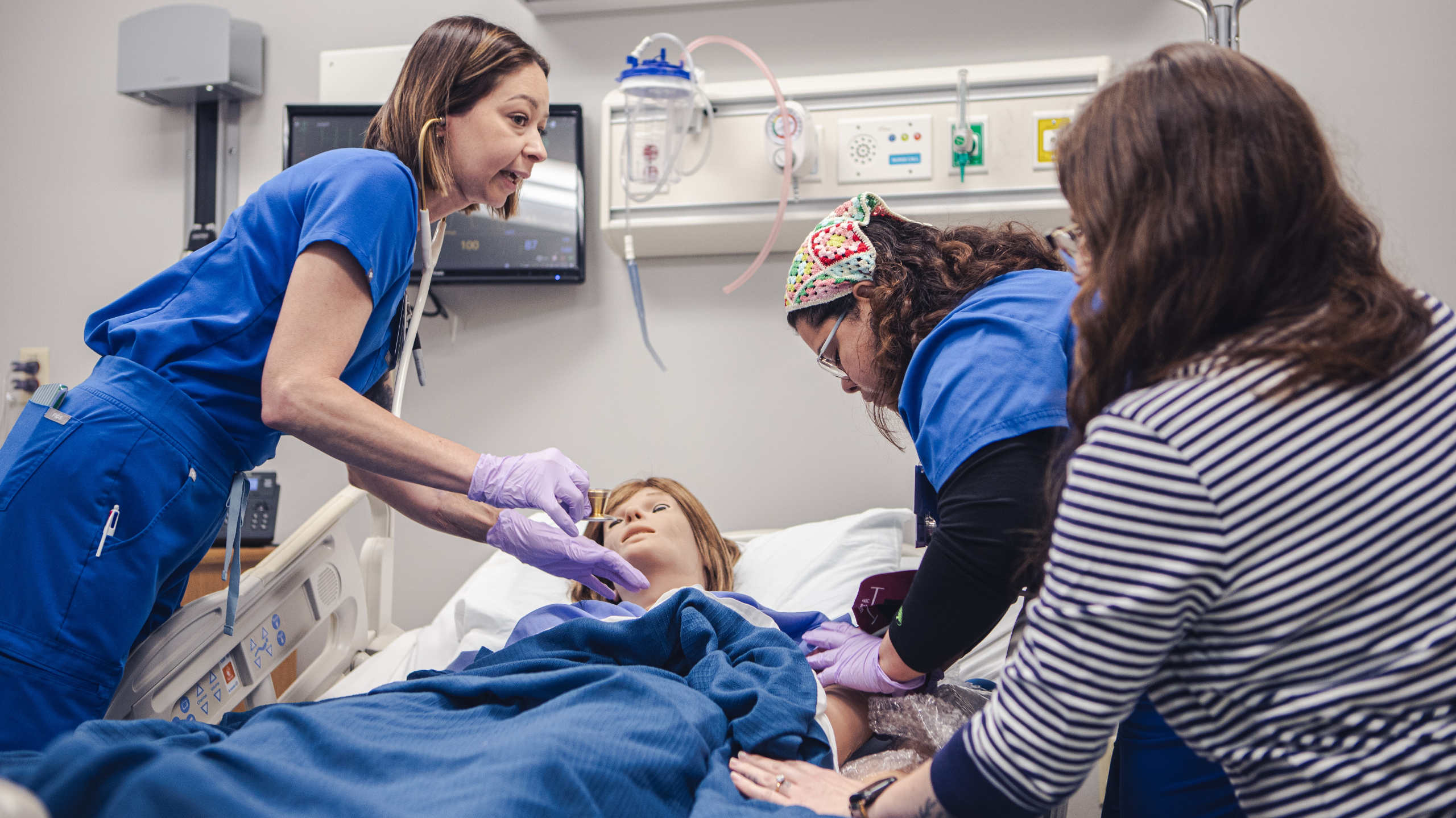
Registered nurses administer medicines and treatments as part of broader patient-care duties that can shift from hour to hour. One moment might involve monitoring vital signs, the next might involve coordinating with a physician or comforting a worried family member. A bedside nurse typically holds a defined assignment on one unit, but the role itself touches nearly every part of a patient’s experience in a hospital or clinic. That constant variety is a major draw for people who want to avoid doing the same task on repeat all day.
Sonography’s Imaging Focus
Sonography centers on acquiring diagnostic images by moving a transducer and following live images on a screen, a task that blends technical precision with patient interaction. A sonographer reviews a patient’s history, adjusts equipment settings to get a clear image, and explains procedures so patients feel prepared going in. Rebecca Ortiz, who studied Diagnostic Medical Sonography at Newman University, described the role as being “the eyes for the radiologist,” explaining that if a sonographer does not catch a pathology on the screen, the radiologist does not see it either. That line captures how much responsibility rides on a sonographer’s technical skill and attention to detail during each exam.
Respiratory Therapy’s Cardiopulmonary Focus
Respiratory therapists assess patients with breathing or cardiopulmonary disorders, perform diagnostic tests, provide treatments, and monitor how patients respond over time. Daily tasks can include:
- Providing oxygen therapy and breathing treatments
- Managing ventilators for patients who cannot breathe on their own
- Performing pulmonary function tests to measure lung capacity
- Teaching patients how to use medications and equipment at home
- Educating patients about managing chronic respiratory conditions
In a hospital setting, a respiratory therapist may cover patients across several units rather than staying confined to one area, which brings its own rhythm of moving between cases throughout a shift.
Training Time and Application Windows
How long it takes to start working matters just as much as the work itself, especially for someone balancing school with other responsibilities. Training length and application timing vary quite a bit across these three paths.
Respiratory Care: 16 Months, 20 Seats
A respiratory care program can run three semesters, about 16 months, starting each August and continuing through fall, spring, and fall again before finishing. One respiratory care program accepts 20 students annually, with applications open from February 1 through April 1. That shorter timeline appeals to students who want to start working sooner rather than committing to a full four-year degree.
https://newmanu.edu/academics/respiratory-care-wichita
Nursing: Two Cohorts of 32 a Year
A Bachelor of Science in Nursing typically takes four years to complete. One nursing program admits two cohorts of 32 students each year, and students apply to the nursing program itself after finishing prerequisite coursework, separately from applying to the university. Fall and spring cohorts each have their own application windows, so timing a prerequisite schedule around those dates takes some planning ahead.
https://newmanu.edu/academics/nursing-wichita
Sonography: A Bachelor’s Path to ARDMS Eligibility
A sonography degree built as a Bachelor of Science, rather than an associate degree, gives graduates a route toward eligibility to apply for ARDMS certification, which is recognized nationally without a state-specific exam. Applications for the fall class typically run from January 1 through March 1. Clinical training is a standard part of this pathway, giving students hands-on experience with imaging equipment and patients before graduation.
https://newmanu.edu/academics/sonography
Credentials and Accreditation Differences
Credentials and accreditation can get confusing fast, so it helps to separate what applies to a program versus what applies to an individual. Nursing programs are typically approved by a state board of nursing and accredited by a recognized nursing accreditor. Respiratory care programs carry their own programmatic accreditation specific to that field. Sonography works differently: the degree itself meets educational requirements that support applying for ARDMS certification, but ARDMS certifies individuals rather than accrediting programs, an important distinction to keep straight when comparing credentials across these careers.
Worth remembering across all three paths: getting accepted into a program does not guarantee graduation, and graduating does not guarantee passing a licensing or certification exam. Each step along the way, from admission to graduation to licensure, carries its own requirements and its own effort. Nursing, sonography, and respiratory care programs each follow distinct application windows and seat counts, a detail worth checking directly before planning a prerequisite schedule around any one path.
Matching the Work to Your Temperament
Beyond pay charts and training calendars, the most useful question might be the simplest one: what does the hardest hour of each job actually feel like? A nurse’s hardest hour might involve juggling multiple patients at once while staying calm under pressure. A sonographer’s hardest hour might involve working to get a clear image on a complicated case while keeping a nervous patient at ease. A respiratory therapist’s hardest hour might involve managing a ventilator for a critically ill patient while also checking in on several other patients across different units.
Talking to someone currently working in each field about that hardest hour, and comparing it honestly against personal strengths and preferences, tends to reveal more than any salary chart. Someone energized by constant variety and long-term patient relationships may lean toward nursing. Someone who enjoys focused technical work with a clear task at hand may lean toward sonography. Someone drawn to specialized equipment and the science of breathing may lean toward respiratory therapy.
Fit Decides This, Not Rank
None of these three careers beats the others. Nursing offers the broadest range of settings and the most paths for advancement over time. Sonography offers pay nearly equal to nursing with a notably faster projected growth rate. Respiratory therapy provides a shorter path to the workforce and a focused role in a specific area of patient care. Each one serves patients well, and each one asks for a different set of daily strengths from the person doing the job.
The smartest approach is comparing the actual daily tasks, the training timeline, and personal temperament against each of these three paths rather than chasing whichever one pays the most this year. Spend time picturing a hard day in each role, talk to people already doing the work, and weigh that honest picture against personal strengths before settling on one path. For a closer look at how one such program is structured, including timelines and requirements, these nursing programs are worth reviewing as a starting point.
Newman University
3100 McCormick
Wichita
Kansas
67213
United States