
Originally Posted On: https://www.ucanpack.com/blog/post/how-to-spot-a-weak-cardboard-box-before-it-fails-during-transit
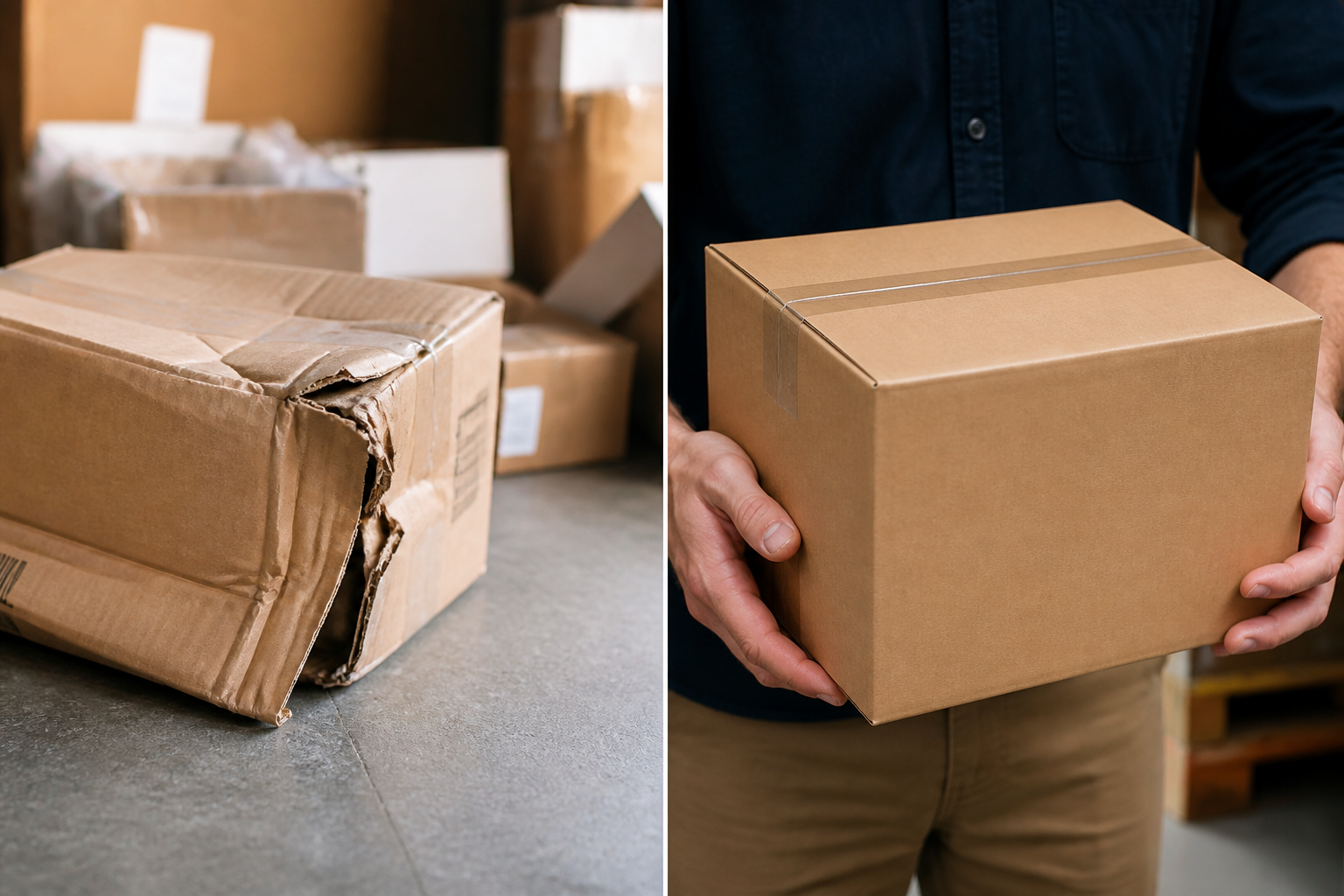
What You'll Need Before You Start Checking Box Strength
You don't need a lab to figure out if a box is going to hold up. A few basic tools and about 10 minutes per box will tell you almost everything.
-
The box itself — empty, so you can flex the walls without guessing what's causing the give.
-
A flashlight or bright lamp to check the bottom flap for the printed ECT stamp (it's often faint on kraft board).
-
A bathroom or shipping scale to weigh your product and compare it against the box's rated capacity.
-
A tape measure for confirming interior dimensions match your item — don't eyeball it.
-
A notepad or phone to jot down ECT numbers, flute type, and wall count so you can compare boxes side by side.
-
Basic knowledge of flute types (A, B, C, E) — you'll need this to judge whether a box's construction matches its job.
-
A stack of 3-5 boxes to test, if you're comparing suppliers or deciding between single-wall and double-wall for a heavier product.
-
Time: roughly 5-10 minutes per box for a full inspection, plus another 5 minutes if you're doing a drop test.
That's it. No special equipment — just your eyes, hands, and a little patience before you tape it shut and hand it to a carrier.
Twenty-five years in this business, and here's what still surprises people: most box failures have nothing to do with bad luck. They come down to picking a cardboard box that was never built for the job in the first place. A soft corner, a bulging wall, a seam that starts peeling before the truck even leaves the dock — these are all warnings you can catch with your own hands, days before a shipment ever gets damaged.
Most folks grab whatever box is on the shelf, tape it shut, and hope for the best. That's a gamble. A box that looks fine sitting empty can collapse under 20 pounds of product and a rough ride through a sorting facility. The good news? Spotting a weak box takes about 30 seconds once you know exactly where to look and what those flute markings and edge crush numbers actually mean.
What You'll Need Before You Start Checking Box Strength
Picture a warehouse worker stacking a pallet of orders, and the bottom cardboard box bows inward before it even reaches the truck. That's a strength failure you could've caught with a five-minute check. Before shipping day, grab a few basics and inspect what's on hand.
Tools for a Proper Box Inspection
You don't need a lab. Here's what works:
-
A flashlight to check for delamination between layers
-
A small ruler to measure flute thickness
-
Your hands — press the panel firmly and feel for give
-
A scale to confirm the box matches its rated weight
Know Your Flute Type: A, B, C, or E-Flute
Strength starts with the flute. Getting familiar with cardboard flute types tells you exactly what you're working with. A-flute is thick and cushiony, built for fragile goods. B-flute is thinner, common for small product packaging. C-flute sits in the middle, offering solid stacking strength for general shipping. E-flute is thin and best for lightweight items needing crisp print detail. Mismatched flute for the job? That's often where failure starts.
Step 1: Check the Edge Crush Test Rating on the Box
Most weak boxes fail because nobody bothered to check the number stamped on the bottom flap. That number is the Edge Crush Test rating, and it tells you how much weight the walls can take before they buckle under stacking pressure. Skip it, and you're guessing.
Reading ECT Numbers Printed on the Bottom Flap
Look for a small certification stamp, usually near the manufacturer's joint or bottom seam. It'll list the ECT number (32, 44, or 51 are common), along with the burst strength and box dimensions. A 32 ECT rating handles roughly 65 lbs per square inch before crushing — fine for light retail goods, but risky for anything heavy or stacked in a warehouse. If you're buying from a cardboard supplier, ask for this spec sheet upfront instead of trusting the label alone.
Why ECT Matters More Than Box Thickness
Thickness feels reassuring, but it doesn't predict how a box behaves under compression. Two boxes can look identical and perform completely differently once stacked five high on a pallet. That's why understanding cardboard box strength test requirements matters more than eyeballing wall thickness before shipping anything fragile.
Step 2: Press and Flex the Walls to Test for Give
Can you push your thumb into the side of a cardboard box and feel it cave in? That's your answer right there. A sound box pushes back with firm resistance. If the wall flexes like a cereal box, it won't survive stacking or a rough truck ride.
Single-Wall vs Double-Wall Corrugated Boxes
Single-wall board works fine for lighter items — anything heavy or fragile needs double-wall construction — the extra layer of fluting adds real stacking strength. Premium sbs cardboard boxes also offer this kind of rigidity for retail-ready product packaging, not just shipping.
Warning Signs: Soft Spots and Delamination
Run your hand along every panel. Soft spots, bubbling, or peeling layers (delamination) mean the glue bond has failed, and that box is compromised before it even ships. If you're sourcing in volume, comparing bulk cardboard box seller options helps you avoid batches with inconsistent quality control.
Step 3: Inspect the Corners and Seams for Weak Points
About 65% of transit failures start at a seam or corner, not the flat panel — that's where stress concentrates every time a box gets stacked, dropped, or squeezed on a truck. Check every edge before you trust a batch of boxes to ship anything fragile.
Glued Seams vs Stitched Seams
Glued seams look clean but can peel apart under humidity or rough handling. Stitched (stapled) seams hold tighter under load, especially for heavier loads like bulk shipments or moving boxes. If you're buying in volume, run a quick cardboard box fulfillment cost audit to see if weak seams are quietly driving up your replacement and reorder costs.
Bulging or Cracked Corners After Packing
Pack a sample box — watch the corners. Bulging means the flute's compression strength is maxed out already — before it even hits a conveyor belt. Cracking at the fold line is worse. It's a sign the cardboard box quality wasn't built for the weight you're putting inside it.
Step 4: Match Box Size and Weight Capacity to Your Product
Bigger isn't stronger. That's the myth most first-time shippers believe, and it's wrong. A larger cardboard box with thin walls flexes under weight it was never rated to hold, and flex is exactly what cracks a corner mid-transit. Size needs to match both the product and the board strength, not just the item's dimensions.
Common Cardboard Box Sizes and What They're Rated For
Small boxes (8x8x8) typically handle 20-40 lbs. Standard cube sizes like 16x16x16 max out around 65 lbs. Anything approaching 20x20x20 or larger starts pushing single-wall limits, which is where poor fulfillment choices show up as damage claims — a common cause of cardboard box fulfillment errors.
Why 24x24x24 and Other Extra-Large Boxes Need Double-Wall Board
A 24x24x24 box carrying anything over 50 lbs needs double-wall corrugation, period. Single-wall board simply can't resist the compression stacking creates in a truck. For lighter, soft-sided items, kraft paper packaging bags are a smarter, lower-cost alternative than oversizing a weak box.
Common Mistakes to Avoid When Choosing a Shipping Box
Reusing Old Boxes From Home Depot, Walmart, or U-Haul Runs
Picture this: a seller grabs a stack of leftover boxes from a recent move, tapes over the old labels, and ships product the next day. Those boxes already took a beating — crushed corners, soft walls, weakened glue joints. A cardboard box loses a chunk of its stacking strength every time it's flattened and reassembled. If you're shipping regularly, it's worth working with a bulk cardboard box seller instead of gambling on used stock.
Overpacking Small Boxes Past Their Rated Weight
Small boxes get overloaded more than people realize. Cramming 30 pounds into a box rated for 20 stresses the bottom flaps until they blow out mid-transit. Reinforcing the base with corrugated cardboard sheets adds real support. Match weight to rating — don't guess.
How to Confirm Your Box Is Strong Enough Before You Ship It
A weak cardboard box will tell on itself before it ever leaves your hands — you just have to know what to look for. Press down on the top and sides. If the walls flex more than a quarter inch or the corners feel soft, that box isn't going to hold up under stacking weight in a truck.
Doing a Simple Drop Test at Home or in the Office
Pack the box as you would for a real shipment, then drop it from waist height onto a hard floor three times — corner, edge, flat. Check the seams and bottom flaps afterward. If tape splits or the flute crushes, that box fails, plain and simple.
When to Upgrade to Custom Corrugated Boxes Instead
For anything with real weight or fragile edges, generic single wall shipping boxes won't cut it. Move up to double-wall corrugated with a higher ECT rating once you're shipping regularly.
How-To FAQ
Does USPS still give free boxes?
Yes, USPS still hands out free Priority Mail boxes, but they're built for postage-paid flat-rate shipping, not general moving or product protection. Don't grab these for shipping fragile or heavy items outside that program — the board is thin and not rated for stacking weight.
What is another word for cardboard box?
Corrugated box, carton, or shipping carton are the common industry terms. "Cardboard" technically refers to thin, non-fluted material like a cereal box, while a real shipping container is corrugated board with a fluted layer between two liners. If someone at a packaging counter says "carton," that's the box you want for transit.
What's the cheapest place to buy cardboard boxes?
Buying in bulk directly from a corrugated manufacturer is almost always cheaper per box than picking up singles from a hardware store or big-box retailer. Retail moving boxes carry markup because they're sold in small bundles for convenience. If you're shipping regularly, a bulk order with tiered pricing pays for itself within a few shipments.
Where can I get free cardboard boxes?
Grocery stores, liquor stores, and appliance retailers often give away used boxes if you ask at the back of the store. The catch: free boxes are usually worn down from a first trip already, meaning the flutes are compressed, and the ECT rating has dropped. Fine for closet cleanouts. Risky for anything breakable or heavy.
How long does a proper box strength check take?
Realistically, less than two minutes per box once you know what you're looking for. Check the ECT stamp, press the walls, look at the corners — that's it. Skipping this step is exactly how damaged shipments happen.
Is it safe to reuse a box that's already been through one shipment?
It depends on the flute condition and how it was stored. A box kept dry and unstressed can often handle a second trip for light items, but any box that shows crushed edges, soft walls, or water staining should get retired. Reusing a weak box to save a couple dollars isn't worth a damage claim later.
Twenty years in this business teaches you one thing: a box either fails at the seams first or the corners second. There's rarely a third option. Checking the ECT rating, flexing the walls, and eyeballing the corners before packing takes maybe two minutes — cheap insurance against a return you didn't budget for. And that drop test? Do it once before a big shipment goes out, not after a customer emails you a photo of crushed contents.
A cardboard box that looks fine sitting empty on a shelf can still buckle under real weight once it hits a truck full of other freight. Match the flute type and wall count to what you're actually shipping, not what's sitting around the stockroom from a home improvement run.
If your current boxes keep coming up short on any of these checks, stop patching the problem with extra tape. Order a few samples in the size and strength you actually need, run them through the same tests, and settle on a supplier that can back up their strength claims with real numbers.
UCANPACK
753A Tucker Rd
Winder, GA 30680
1 201-975-6272
https://ucanpack.com


